


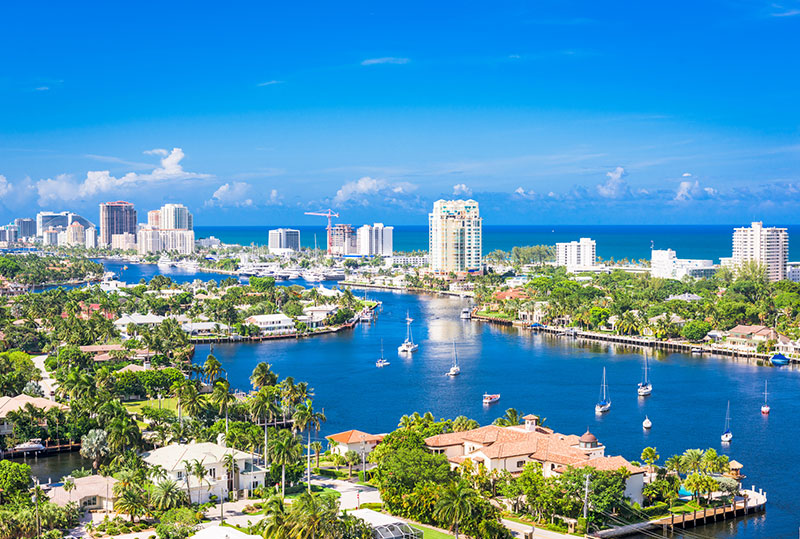
With steady population growth, global interest, and year-round tourism, South Florida offers investors a market where lifestyle appeal and financial opportunity come together.
South Florida continues to rank among the nation’s top investment markets, fueled by steady population growth, international migration, and strong job opportunities.
Tourism keeps both short- and long-term rentals in high demand year-round, while Florida’s tax advantages, especially no state income tax, help maximize returns.
Investors find a wide range of opportunities, from luxury estates in Boca Raton to multifamily projects in Hollywood and sought-after waterfront homes. It’s a diverse, resilient market offering lasting appeal for real estate investors.
We’ll break down the factors shaping South Florida’s market and the opportunities worth exploring to help you make the most informed move.
Table of Contents:
- FAQS About Investing in South Florida
- What Makes South Florida Different From Other Markets?
- What are the Most Popular Types of Real Estate Investments in South Florida Right Now?
- How Much Do You Need to Get Started With Real Estate Investment in South Florida?
- What are the Things You Should Watch Out for as a New Investor in South Florida Real Estate?
- What Should Be Your Next Steps as an Investor?
- Navigate South Florida’s Real Estate Market With The DeMarco Group
FAQS ABOUT INVESTING IN SOUTH FLORIDA
- What makes South Florida different from other markets?
Scarce coastal land, thriving port activity, and evolving neighborhoods set South Florida apart, creating a fast-moving real estate environment unlike other US markets. Read more
- What are the most popular types of real estate investments in South Florida right now?
Multifamily housing continues to be a key investment driver in South Florida, with strong demand fueled by steady migration and population growth in Miami-Dade and Broward. Read more
- How much do you need to get started with real estate investment in South Florida?
Entry costs vary widely depending on the property type, from multifamily buildings to short-term rentals. Financing programs and creative strategies help make the market more accessible to investors. Read more
- What are the things you should watch out for as a new investor in South Florida real estate?
Insurance costs, climate-related risks, and zoning regulations can add complexity. Partnering with trusted local experts is essential for navigating these challenges successfully. Read more
- What should be your next steps as an investor?
Clarify your investment goals, focus on the right market or asset type, and work with an experienced advisor to identify the strongest opportunities in South Florida. Read more
WHAT MAKES SOUTH FLORIDA DIFFERENT FROM OTHER MARKETS?
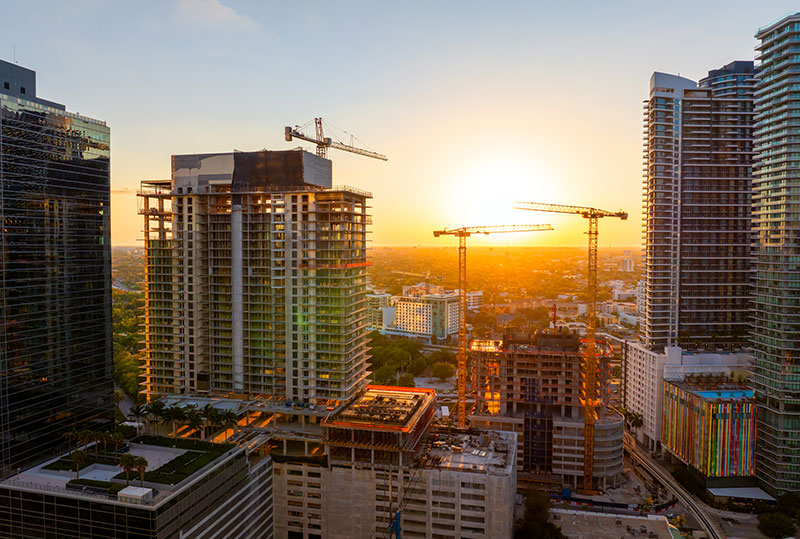
Scarce coastal land, thriving port activity, and evolving neighborhoods set South Florida apart, creating a fast-moving real estate environment unlike other US markets.
While many US markets face slower growth or cooling demand, South Florida continues to attract new residents, global businesses, and international interest. Several dynamics make it distinct and understanding them is essential when considering real estate investment in South Florida.
-
Coastal markets mean limited land and rising demand
South Florida is defined by its coastline, leaving little room for outward expansion. Unlike inland metros that can expand outward with relative ease, cities like Miami, Fort Lauderdale, and West Palm Beach are hemmed in by the Atlantic Ocean and the Everglades, creating natural scarcity. This limited land supply drives strong competition for both luxury and rental properties, particularly in waterfront neighborhoods where lifestyle and climate remain major draws.
-
Port activity and trade fuel industrial growth
The region’s role as a gateway to Latin America and the Caribbean also sets it apart. South Florida’s major ports, namely Port Miami, Port Everglades, and Port of Palm, are among the busiest in the nation, fueling demand for warehouse, logistics, and industrial properties. While many new investors instinctively look to residential or vacation rentals, the industrial sector here has proven remarkably resilient, benefiting from global trade and the rise of e-commerce.
-
Fast-changing neighborhoods and zoning differences across counties
The region is a patchwork of counties and municipalities, each with distinct zoning and growth policies. A neighborhood in Miami-Dade may develop rapidly, while one nearby in Broward or Palm Beach could evolve at a slower pace. These hyper-local differences create both opportunity and risk, making due diligence essential

WHAT ARE THE MOST POPULAR TYPES OF REAL ESTATE INVESTMENTS IN SOUTH FLORIDA RIGHT NOW?
Multifamily housing continues to be a key investment driver in South Florida, with strong demand fueled by steady migration and population growth in Miami-Dade and Broward.
South Florida’s real estate market is as varied as its communities, offering investors multiple pathways to generate returns.
Multifamily Properties
Multifamily housing remains a cornerstone of real estate investment in South Florida, especially in Miami-Dade and Broward, where migration and population growth continue to drive demand. Vacancies have stayed below the national average, providing stability and steady occupancy. While cap rates are tighter than in years past, the asset class still appeals to investors seeking long-term income and appreciation. For those willing to take a hands-on approach, tenant turnover and renovations can present opportunities to enhance cash flow and property value.
Industrial Properties
The region’s role as a global trade hub positions industrial real estate as one of its most resilient sectors. Warehouses, logistics centers, and cold storage facilities remain in high demand, with millions of square feet delivered or planned in recent years. Industrial tenants often sign long-term leases and require little upkeep, making this asset class attractive to passive investors and those exploring 1031 exchanges. With trade and e-commerce continuing to expand, industrial properties offer diversification and durability.
Short-Term and Vacation Rentals
As a year-round vacation destination, South Florida supports a thriving short-term rental market. Tourism growth has kept occupancy strong and daily rates competitive in places like Miami Beach and the Keys. This strategy works best for investors comfortable with hospitality and branding, since guest experience directly impacts returns. Local regulations vary, but for those who navigate them effectively, short-term rentals can deliver strong yields and added flexibility.

HOW MUCH DO YOU NEED TO GET STARTED WITH REAL ESTATE INVESTMENT IN SOUTH FLORIDA?
Entry costs vary widely depending on the property type, from multifamily buildings to short-term rentals. Financing programs and creative strategies help make the market more accessible to investors.
For many first-time or out-of-state investors, the biggest question isn’t where to buy, but how much capital it actually takes to enter the South Florida market. Between upfront costs, financing requirements, and different asset classes, the numbers can feel elusive. The good news is that once you break it down, the path forward becomes clearer and more accessible than it first appears.
What are the typical entry prices for different asset types?
Entry costs vary significantly between residential rentals, multifamily buildings, and commercial properties. Each comes with its own financial profile, and choosing the right path depends on your capital, risk tolerance, and long-term goals.
- Multifamily – These properties generally sit at the higher end of the entry spectrum, since larger complexes require substantial capital. Smaller duplexes and triplexes provide a more approachable way in, though they still involve higher purchase prices and specialized financing.
- Industrial – Industrial real estate, such as warehouses, logistics centers, and distribution hubs, usually demands larger upfront commitments. While these assets often deliver stable, long-term returns, investors must be ready for stricter lending standards and larger reserve requirements.
- Short-Term Rentals (STRs) – Vacation rentals, from condos to single-family homes, can provide a more accessible starting point. However, because regulations vary widely across South Florida communities, due diligence is critical to ensure compliance and profitability.
What are the upfront costs that investors should consider?
Beyond the purchase price itself, investors should budget for a range of mandatory expenses that shape the true cost of entry. Factoring these in from the outset helps avoid surprises.
- Down payments – Investment properties typically require a higher down payment than primary residences, ensuring the investor has meaningful equity in the deal.
- Closing costs – Expenses such as appraisals, inspections, title insurance, and lender fees must be included in every budget. While smaller in proportion than the down payment, these costs are unavoidable and can add up quickly.
What are the financing terms and options that investors should know about?
Financing structures vary by property type, and the loan you choose can significantly influence both upfront requirements and long-term performance. Knowing what to expect helps align your strategy with the right type of capital.
- Multifamily financing – Commercial lenders often handle these loans, with terms designed for rental income properties. More detailed underwriting is common, particularly for larger buildings.
- Industrial financing – Industrial assets are frequently financed through business-focused loan programs such as SBA (Small Business Administration) or CMBS (Commercial Mortgage-Backed Securities) products. These options tend to come with stricter reserve requirements and conditions.
- Short-term rental financing – Investor-friendly lenders in South Florida increasingly offer products that consider projected rental income in their underwriting. This can make financing more accessible for those targeting the vacation rental market.
Which creative strategies can investors tap to lower their barrier to entry?
Not every investor has to bring six or seven figures to the table alone. Alternative structures provide ways to reduce individual exposure while still accessing strong opportunities.
- Joint ventures – Pooling resources with partners allows investors to share both upfront costs and future returns, creating a more balanced approach to risk.
- Syndications – By contributing alongside other investors in a professionally managed project, smaller investors can participate in larger deals that would otherwise be out of reach.
- House hacking – Living in one unit of a small multifamily property while renting out the others offers an approachable entry point. It helps offset expenses and builds equity over time, making it one of the most practical ways to begin investing.

WHAT ARE THE THINGS YOU SHOULD WATCH OUT FOR AS A NEW INVESTOR IN SOUTH FLORIDA REAL ESTATE?
Insurance costs, climate-related risks, and zoning regulations can add complexity. Partnering with trusted local experts is essential for navigating these challenges successfully.
Sun-soaked beaches, vibrant neighborhoods, and steady rental demand make South Florida one of the country’s most attractive regions for buyers and investors alike. But beneath the allure of coastal living and thriving urban centers are practical realities that can shape both the performance of your investment and the day-to-day management of your property.
1️⃣ Factor in Insurance Premiums
Florida’s property insurance market is challenging, and those costs can have a major impact on your returns. Premiums have climbed in recent years due to more frequent storms, higher repair bills, and insurers scaling back coverage across the state. Understanding what these expenses mean for your bottom line is essential, so keep an eye on details such as:
- Premiums and coverage – Annual costs in South Florida are significantly higher than in most US markets, particularly for coastal homes and multifamily buildings. Some neighborhoods may only qualify for specialized, high-cost policies.
- Vacancy exposure – Homes left unoccupied, even for short periods, face higher risks of damage or theft, requiring additional protection.
- Short-term rentals – Investors pursuing STRs often need broader coverage, including business income, liability, hurricane protection, and building code compliance.
2️⃣ Weigh the Realities of Climate Risks
Hurricanes, tidal flooding, and sea-level rise are ongoing challenges that affect both property values and rental demand in South Florida. Thinking through how these risks may affect your long-term goals will help you make a more informed choice. Key considerations include:
- Flood zones – Properties in designated floodplains face higher insurance premiums and stricter lending requirements.
- Sea-level rise – Coastal areas are more vulnerable to long-term value shifts, with potential implications for resale and appreciation.
- Hurricane resilience – Roof condition, elevation, and stormproof features like impact windows can influence both property safety and insurability.
3️⃣ Understand Local Permitting and Zoning
Even the perfect property on paper can run into roadblocks if local regulations don’t align with your plans. Rules for short-term rentals, renovation projects, and land use vary significantly from one community to the next. Since these differences directly shape how a property can be used and what kinds of returns it generates, reviewing these details is one of the most important steps in real estate investment in South Florida. It’s smart to pay attention to factors like:
- Rental rules – Some neighborhoods encourage short-term rentals, while others restrict or ban them outright.
- Permit timelines – Even modest renovations may require weeks or months of review, affecting project schedules.
- Zoning restrictions – Local codes determine whether a property qualifies for residential, commercial, or mixed-use purposes, directly impacting tenant strategy and resale potential.
4️⃣ Build a Team of Local Experts
For many first-time or out-of-state investors, the smartest move is assembling a strong support system. Realtors, attorneys, and property managers bring local knowledge that’s hard to replicate from afar, helping you navigate everything from neighborhood dynamics to legal requirements. A well-rounded team often includes:
- Realtors – Specialists in South Florida markets can spot emerging neighborhoods, track price movements, and align opportunities with investment goals.
- Attorneys – Florida-licensed real estate attorneys review contracts, verify title histories, and ensure compliance with local regulations.
- Property managers – Particularly valuable for out-of-town investors, managers oversee tenants, handle maintenance, and manage the day-to-day logistics of property operations.

WHAT SHOULD BE YOUR NEXT STEPS AS AN INVESTOR?
Clarify your investment goals, focus on the right market or asset type, and work with an experienced advisor to identify the strongest opportunities in South Florida.
Once you’ve decided that South Florida is the right place to invest, the key is moving from broad research into tangible action. By defining your goals, narrowing your market focus, consulting with experts, and reviewing both on- and off-market deals, you’ll set yourself up for a smoother, more strategic entry into this dynamic region.
✅ Start by Defining What Success Looks Like
Every investor has a different vision of success, and your priorities will shape the kinds of properties worth pursuing. Think about which of these approaches best matches your financial objectives and lifestyle needs:
- Cash flow – For many, the appeal lies in steady monthly rental income. Properties that cover expenses while leaving a reliable surplus offer security and consistent returns. Cash flow-focused investors often look at multifamily buildings or smaller condos in high-demand rental zones.
- Appreciation – Others prefer to play the long game, targeting neighborhoods with strong growth potential. South Florida’s ongoing population influx and infrastructure expansion mean certain areas are poised for rising property values over time. This strategy may involve accepting modest short-term income in exchange for higher long-term gains.
- Lifestyle – Some buyers want a personal connection to their investment. Owning a condo on the beach or a golf-course home allows for part-time enjoyment while still generating income through seasonal rentals when the property isn’t in use.
✅ Choose the Markets That Fit Your Vision
South Florida isn’t one uniform market; it’s a mosaic of distinct cities and neighborhoods, each with its own pace and investment profile. Narrowing your focus to a specific region ensures you’re able to compare rental demand, property values, and future growth in greater depth. Consider how these markets align with your vision for real estate investment in South Florida:
- Miami – Known for its international energy and constant tenant turnover, Miami offers opportunities for investors seeking strong rental demand and global appeal.
- Fort Lauderdale – With a growing job base and more relaxed pace, it attracts renters looking for stability and lifestyle balance.
- Palm Beach County – Defined by lifestyle-driven communities, from luxury waterfront estates to family-friendly suburbs, it offers a wide range of long-term potential.
✅ Bring an Expert Into the Conversation
Even with careful preparation, the guidance of an expert can help you move from research to action more confidently. These professionals bring clarity to key areas of the process, including:
- Financing guidance – Advisors and agents can walk you through mortgage options, help you secure pre-approval, and connect you with lenders familiar with investment properties.
- Tax insights – Experts clarify how rental income is treated under US tax law and highlight deductible expenses such as maintenance, property management, and loan interest.
- Management strategies – An expert can help you decide whether to self-manage, hire a local property manager, or work with a full-service agency that oversees everything from purchase to tenant relations.
✅ Start Exploring the Deals
Once you’ve set your goals and chosen a location, begin reviewing properties with a clear strategy.
Online listings are a helpful entry point, but many of the best opportunities for real estate investment in South Florida trade privately through broker networks and off-market channels.
Evaluating options means looking beyond the asking price. Consider rental yield, vacancy risk, and operating costs like repairs, maintenance, and management fees. To assess appreciation potential, study neighborhood growth patterns and long-term demand.
NAVIGATE SOUTH FLORIDA’S REAL ESTATE MARKET WITH THE DEMARCO GROUP
South Florida offers a variety of avenues for building wealth, but the key is knowing which one best fits your goals.
That’s where The DeMarco Group comes in. With decades of experience across multifamily, industrial, retail, and hospitality assets, the team has guided both first-time buyers and seasoned investors toward opportunities that balance growth potential with smart risk management. Their tailored strategies and hands-on approach make real estate investment in South Florida feel less overwhelming and far more rewarding.
If you’re ready to take the next step in South Florida’s real estate market, The DeMarco Group is here to help you move forward with confidence. Call 954.453.1000 or reach out by email to start exploring opportunities today.
